Marine Iguana
Scientific Name: Amblyrhynchus cristastus
Type: Reptile
Size: 0.7 - 1.5 m
Diet: Herbivorous (algae)
Lifespan: 5 - 12 years
Status: Vulnerable (Differs by island)

Facts
-
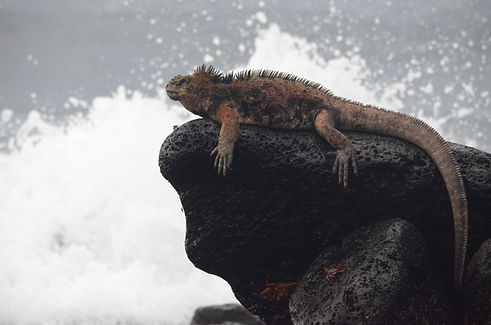
Marine iguanas are the only aquatic lizard in the world, forced to adapt to saltwater conditions due to a lack of food on the islands.
-
Are closely related to land iguanas, but while they live on the coast, land iguanas live in the highlands. This difference isolated them and prevented them form mixing, and now no longer interbreed as different species.
-
The tail of a marine iguana is so heavy they can no longer lift it up, so tracks on sand have a line between the claw tracks.
Evolutionary Adaptations

Structural
-
Black colour of skin, to better absorb heat from sunlight, for better energy efficiency.
-
Thick, muscly tail allows for control and strong propulsion through water.
-
Sharp claws and curved dactyly allow strong grip onto slippery rocks.
-
Snub nose allows easier biting and scraping off rocks, makes eating easier.
-
Changing colours during mating season to better show off abilities and health to potential mates.

Behavioural
-
While not terribly social creatures, they form large congregations to conserve body heat together
-
Tuck arms and legs close to the body to have a more hydrodynamic shape, reducing energy use.
-
During mating season, males will fight each other to assert dominance and strength as a mate, so the strongest will have the most offspring.
-
choses to rest on darker rocks instead of lighter sand, making it easier to warm up.
Physiological
-
Can slow their heartrate and metabolism down by half, reducing the negative effects of cold water on a cold-blooded animal, and allowing them to stay for longer periods under water.
-
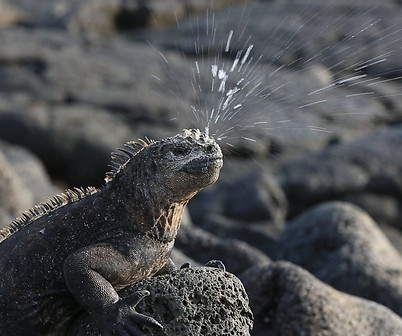
Filters their blood of saline content at their nostrils, so they can sneeze it out, nullifying the negative impacts of a saltwater environment