Grant Finch Study
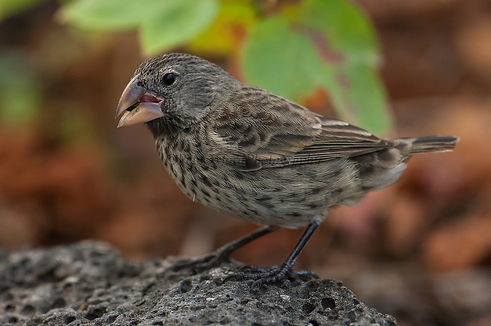
While 200 years ago Charles Darwin used the Galapagos Islands to develop the Theory of Evolution, investigations are still happening on deeper aspects of natural selection. One such study was done by Peter and Rosemary Grant, both evolutionary biologists, who spent 40 years in the Galapagos studying the finch population of Daphne Major, making new discoveries and gaining important data on evolution.
What did they study?


The Grant Finch Study was a 40 year long investigation, from 1973 to 2013, on how changing climates caused adaptations across the Medium Ground Finch population on Daphne Major. During it they recorded almost every finch on the island, measuring factors like beak depth, beak length, and body mass and how climate factors like drought and La Nina affected the statistics.
While the expectation was only to find slight variations in stressful conditions, a drought in the 4th year of the study provide some of the most valuable data for the theory of evolution through natural selection ever.

The 4th Year Drought
During the fourth year of the Grant Finch Study, 1977, an 18 month period of no rain occurred, and all plants besides the cactuses became sparse. In the following year the beak size was visibly larger. How had a weather event affected a physical feature of the finches?
Suddenly, all the plants which provided small seeds were rare, and the only reliable food source became the large thick seeds from the cactus. Unfortunately, many of the birds which ate small seeds had small beaks, and they couldn't eat the larger seeds. As a result, many of the finches with smaller beaks died.
The results of the following year astounded the Grants; due to the situation favouring finches with larger beaks the average beak size had moved up by 5 mm. The opposite result happened decades later when a period of torrential rain occurred and the island was overrun by plants producing small seeds. They watched natural selection happen in action.
The Conclusion
The Grant Finch Study was important for naturalists to gain a deeper understanding of how natural selection worked. While it didn't add anything new, it taught us how natural selection works in real time and gave us a view on how species may change over millions of years. By relating cause, the drought and resultant change in food sources, and effect, the change in beak depth, we now have better knowledge of the process of natural selection.